
Guide to Home Energy Storage: What System Is Right For Your Home?
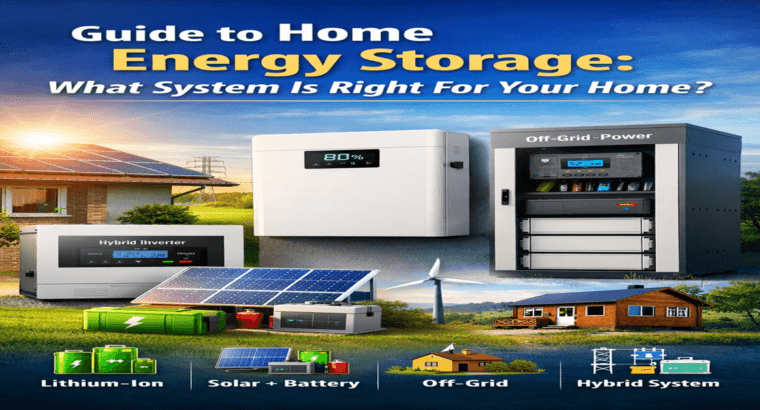
As electricity costs continue to rise and power outages become more common, homeowners are increasingly turning to home energy storage systems for reliable backup power and long-term savings. Whether your goal is to reduce energy bills, maximize solar usage, or gain energy independence, choosing the right system is essential.
This guide from F2CDeals explains how home energy storage works, the different system types available, and how to select the best option for your home.
What Is Home Energy Storage?
Home energy storage systems use batteries to store electricity for later use. The stored energy can come from solar panels, the utility grid, or backup generators. When grid power is unavailable or electricity prices are high, the system automatically supplies power to your home.
Common benefits include:
- Backup power during outages
- Lower electricity bills
- Better use of solar energy
- Reduced dependence on the grid
Types of Home Energy Storage Systems
Understanding the different system types helps you make an informed buying decision.
Lithium-Ion (LiFePO4) Battery Systems
Best for: Most residential homes and solar users
Lithium iron phosphate (LiFePO4) batteries are the most popular home energy storage solution due to their safety, efficiency, and long lifespan.
Key advantages:
- 6,000+ charge cycles
- High efficiency (90–95%)
- Compact design
- Low maintenance
- Excellent thermal stability
Typical system sizes range from 5kWh for apartments to 20–30kWh for large homes.
Solar Battery Storage Systems
Best for: Homes with solar panels
Solar battery storage systems store excess electricity generated during the day and make it available at night or during grid failures.
Benefits include:
- Reduced grid electricity usage
- Increased solar self-consumption
- Faster return on solar investment
- Clean and renewable energy
Off-Grid Energy Storage Systems
Best for: Remote areas and locations without grid access
Off-grid systems operate independently of the utility grid and usually combine solar panels, large battery banks, and backup generators.
Important considerations:
- Requires larger battery capacity
- Professional system design is essential
- Higher upfront investment
Hybrid Energy Storage Systems
Best for: Homes needing flexibility
Hybrid systems integrate grid power, solar energy, and battery storage. They intelligently switch between power sources based on availability and cost.
How to Choose the Right Home Energy Storage System
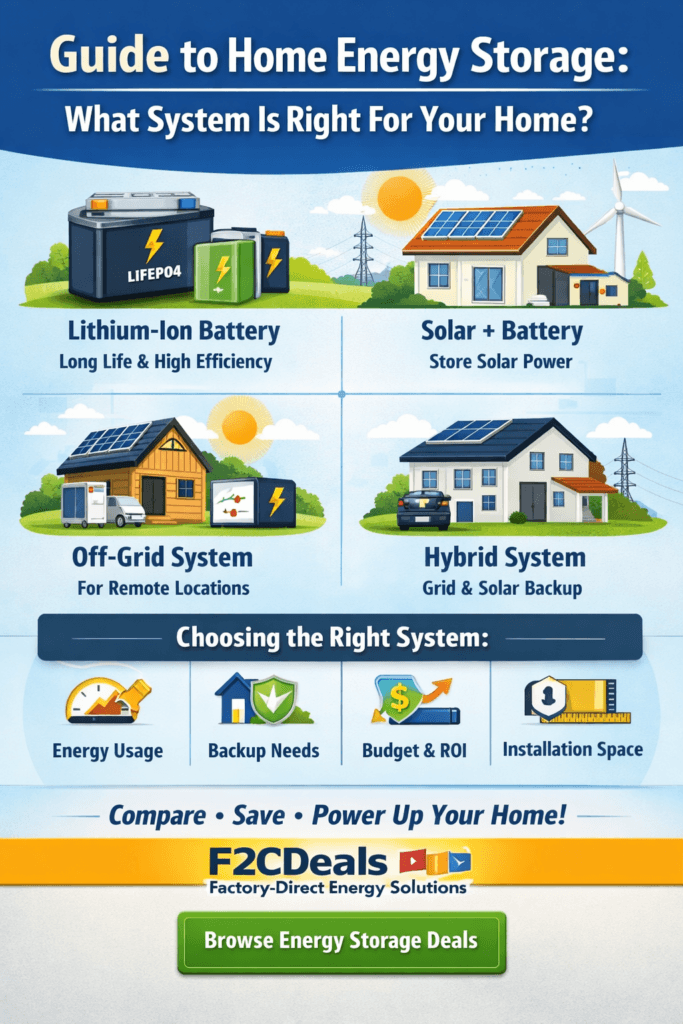
Before purchasing, consider the following key factors.
What size home energy storage system do I need?
Most homes need a 5kWh–10kWh battery for essential backup, while whole-home backup may require 15kWh–30kWh depending on daily electricity usage.
1. Daily Energy Usage
Review your electricity bill to determine your average daily consumption in kilowatt-hours (kWh).
- 5–8 kWh/day: 5–7 kWh battery
- 8–15 kWh/day: 10–15 kWh battery
- 15+ kWh/day: 20–30 kWh system
2. Backup Power Needs
Decide whether you want to power only essential appliances such as lights, refrigerator, and WiFi, or provide whole-home backup including air conditioning and EV chargers.
3. Budget and Long-Term Value
While lithium battery systems may have higher upfront costs, they offer:
- Longer lifespan
- Lower replacement frequency
- Better long-term cost savings
4. Installation Space
Home energy storage systems are available in wall-mounted, floor-standing, and outdoor-rated designs. Ensure sufficient space and proper ventilation before installation.
Popular Home Energy Storage Options on F2CDeals
On F2CDeals, buyers can compare:
- LiFePO4 battery packs (51.2V and modular systems)
- Stackable home battery solutions
- Solar-compatible hybrid inverters
- Factory-direct and wholesale energy storage listings
F2CDeals connects buyers directly with manufacturers and verified suppliers, helping reduce costs and improve transparency.
Installation and Safety Considerations
For safe and reliable operation:
- Use certified installers
- Follow local electrical codes
- Ensure proper ventilation
- Choose batteries with advanced Battery Management Systems (BMS)
- Look for fire-resistant enclosures and protection features
The Future of Home Energy Storage
The demand for home energy storage is growing rapidly due to increasing solar adoption, smart grid development, and electric vehicle charging. Modern systems are becoming smarter, more efficient, and easier to integrate into everyday homes.
Is Home Energy Storage Worth It?
Home energy storage is a valuable investment for homeowners seeking:
- Reliable backup power
- Lower energy costs
- Energy independence
- Sustainable living solutions
With the right system, you can take control of your energy usage and protect your home from power disruptions.
Find the Right Home Energy Storage System on F2CDeals
Explore factory-direct home energy storage systems, compare battery technologies, and connect with verified suppliers on F2CDeals.
Start exploring home energy storage solutions today.


[…] Check 👉 Guide to Home Energy Storage System […]