
LFP Battery Lifespan: How Long Do LFP Batteries Really Last?
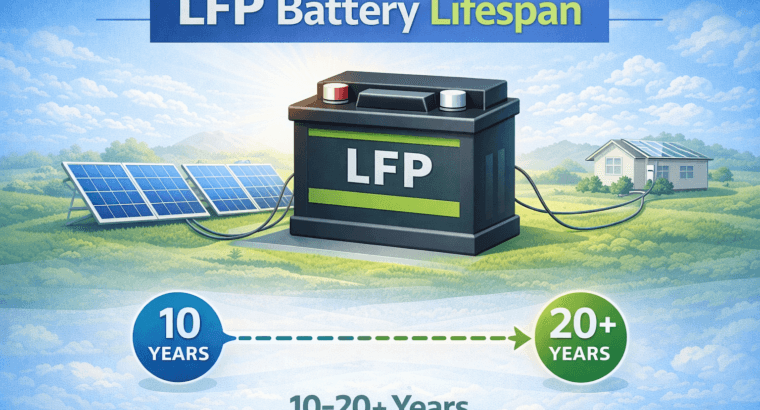
Understanding LFP battery lifespan is crucial when choosing an energy storage system for home solar, backup power, or off-grid applications.
Unlike traditional lithium-ion batteries, Lithium Iron Phosphate (LFP) batteries are designed for long-term daily use, offering superior durability, safety, and reliability. But how long do LFP batteries really last in real-world conditions?
This guide breaks down cycle life, calendar life, degradation factors, and real usage expectations.
???? Overview
The average LFP battery lifespan is 10 to 20 years, depending on usage, depth of discharge, and operating temperature. LFP batteries typically last 4,000 to 8,000+ charge cycles, making them one of the longest-lasting lithium battery technologies available today.
⏳ What Is the Average LFP Battery Lifespan?
Most high-quality LFP batteries last:
- 10–20 years (calendar lifespan)
- 4,000–8,000+ cycles at 80% depth of discharge
- Some premium systems exceed 10,000 cycles
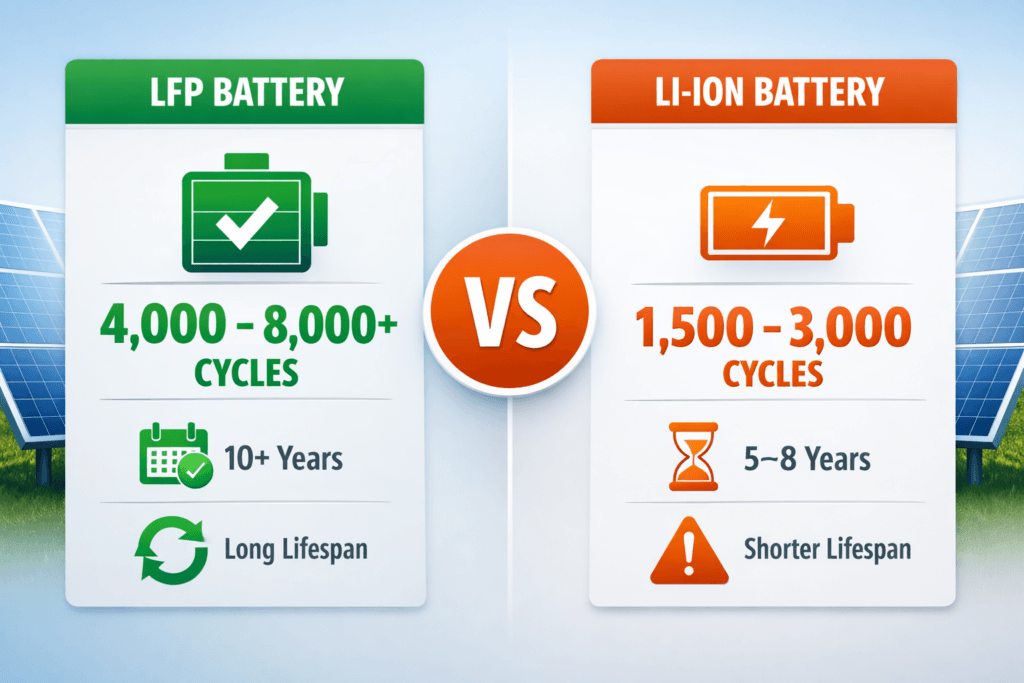
In practical terms, this means an LFP battery used once per day can continue operating efficiently for over a decade with minimal capacity loss.
This long durability is why LFP is widely recognized as one of the long lifespan batteries available for energy storage today.
???? LFP Battery Cycle Life Explained
What is cycle life?
A cycle is one full charge and discharge of a battery.
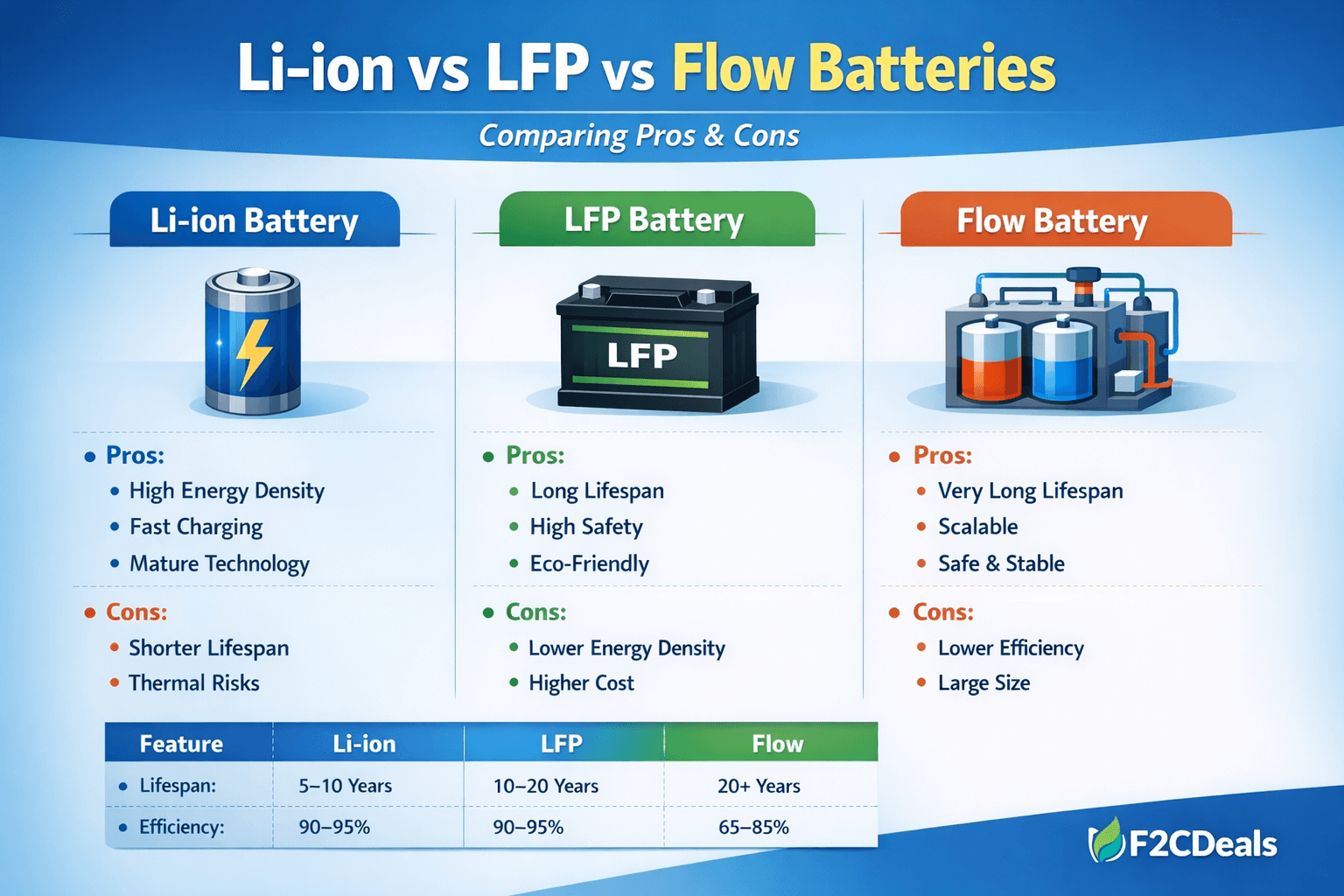
- LFP batteries: 4,000–8,000 cycles
- Standard Li-ion batteries: 1,500–3,000 cycles
Even after thousands of cycles, LFP batteries often retain 70–80% of their original capacity, making them ideal for daily-use applications like solar energy storage.
???? Why LFP Batteries Last Longer Than Other Lithium Batteries
Several factors contribute to the long LFP battery lifespan:
✅ Stable Chemistry
LFP batteries use iron phosphate, which is chemically stable and resistant to overheating and thermal runaway.
✅ Lower Degradation Rate
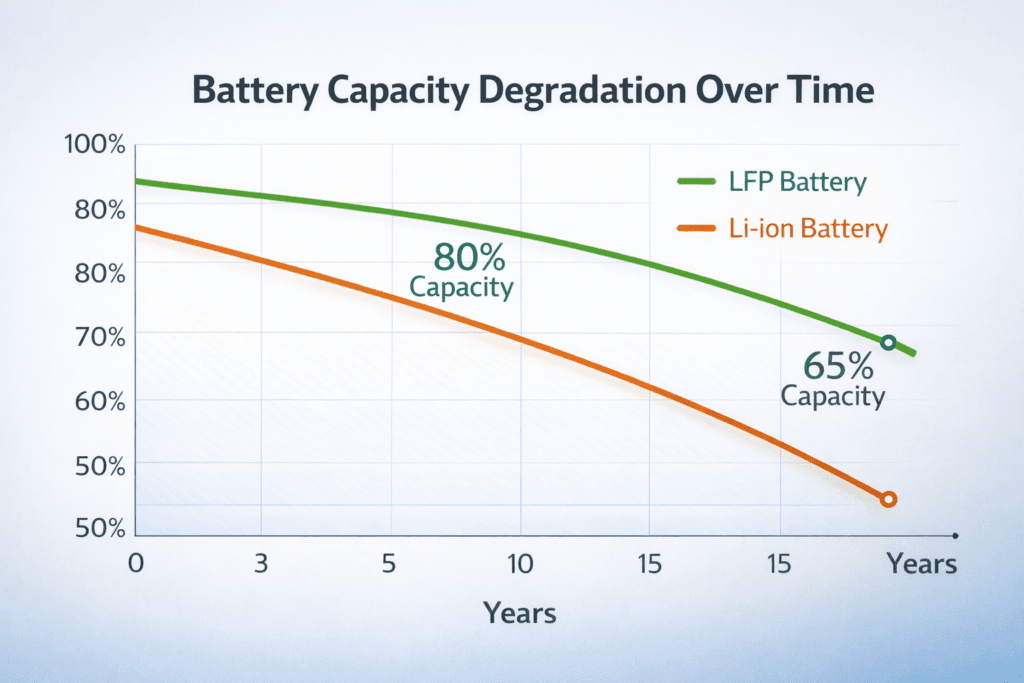
LFP batteries degrade much slower compared to Li-ion batteries, even with frequent cycling.
✅ High Thermal Tolerance
They perform well in hot climates, where other lithium batteries lose capacity faster.
???? Real-World LFP Battery Lifespan (Home & Solar Use)
For home solar energy storage systems:
- Daily cycling: 1 cycle/day
- Expected lifespan: 12–18 years
- Capacity after 10 years: ~75–85%
This makes LFP batteries the preferred choice for homeowners seeking long-term energy independence.
⚠️ Factors That Affect LFP Battery Lifespan
Even though LFP batteries are durable, lifespan depends on usage conditions:
???? Depth of Discharge (DoD)
- Ideal DoD: 70–90%
- Lower DoD = longer lifespan
???? Temperature
- Optimal range: 15°C–30°C
- Extreme heat shortens battery life
???? Charging Quality
- Proper BMS and compatible inverter extend lifespan
???? LFP vs Li-ion Lifespan Comparison
| Battery Type | Average Lifespan | Cycle Life |
|---|---|---|
| LFP Battery | 10–20 years | 4,000–8,000+ |
| Li-ion Battery | 8–12 years | 1,500–3,000 |
| Flow Battery | 20+ years | 10,000+ |
???? For a full comparison of battery technologies, see our long lifespan batteries guide.
???? Is LFP the Longest-Lasting Battery for Homes?
Yes. While flow batteries last longer overall, LFP batteries offer the longest practical lifespan for residential and small commercial energy storage.
They provide the best balance of:
- Lifespan
- Safety
- Cost over time
- Daily cycling performance
❓ FAQs – Optimized for PAA & Voice Search
How long do LFP batteries really last?
Most LFP batteries last 10–20 years depending on usage and environmental conditions.
How many cycles can an LFP battery handle?
High-quality LFP batteries can handle 4,000–8,000+ cycles.
Do LFP batteries degrade over time?
Yes, but much slower than Li-ion batteries. Capacity loss is gradual and predictable.
Are LFP batteries worth the higher upfront cost?
Yes. Their long lifespan and low degradation make them more cost-effective over time.


Leave your comment